
Artificial Application Systems in Education outlines a framework covering key technologies, teaching, learning and assessment scenarios, as well as safety and ethics. Grounded in the principles of human-centered design, educational value and trustworthy technology, it provides technical guidance for the full lifecycle of AI applications in education. It defines basic requirements for enabling technologies, common education functions, and safety and ethical safeguards. It can also be used to guide system design, development, testing, deployment and evaluation.
Fundamental Elements of AI-Empowered Smart Campuses provides a framework for the planning, design and development of smart campuses supported by AI. It defines a general architecture covering portals, applications, support systems and AI capability platforms. The document highlights the role of AI agents and multimodal interaction, and explains how education-specific AI models, general large language models and basic AI capabilities can work together to connect physical learning spaces with digital systems.
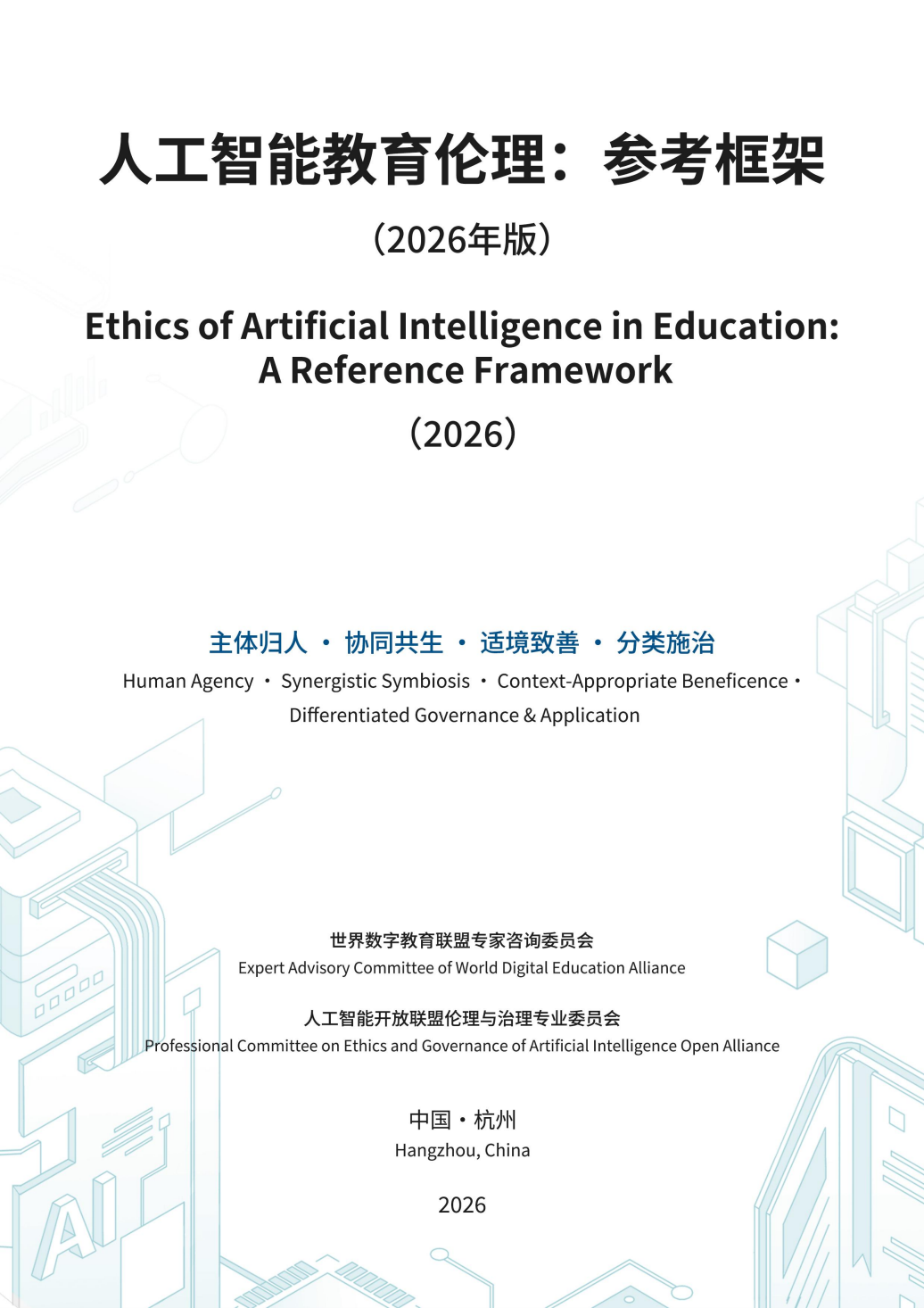
Ethics of Artificial Intelligence in Education: A Reference Framework outlines four principles. First, decision-making should rest with humans, with AI serving only as a supplementary tool. Second, human–AI collaboration should build on complementary strengths of both humans and AI systems while avoiding overreliance on AI. Third, AI systems should be adapted to specific learning environments and be used for the greater good. Fourth, differentiated governance should be adopted to address various AI-related ethical risks.
The document identifies three types of risks and lays out the principles for deciding who should be held accountable. It also sets forth codes of conduct for educators, learners, and education institutions in the fields of basic education, higher education, and vocational education. With regards to risk prevention and control, the document specifies three AI application scenarios—prohibited, limited, and encouraged use of AI tools—and outlines a dynamic adjustment mechanism to ensure rational and wise human–AI interaction.
Frontiers of Digital Education is an English academic journal supervised by the Ministry of Education of the People’s Republic of China, sponsored by Higher Education Press, and internationally distributed by Springer Nature. The journal is aiming to reflect the dynamic trends in digital education policies, academic frontiers, and research hotspots from various countries. The journal explores key issues and challenges in digital education and technological innovation, establishing a distinctive platform for the dissemination and communication of significant achievements in digital education. The dedication of this journal lies in contributing to the advancement of digital education.
As countries around the world hold the universal consensus on education digitalization to provide everyone with inclusive and equal access to high-quality education, and in the face of educational development and reforms, China is ready to join hands with other countries in promoting mutual exchange between different civilizations, sharing high-quality education resources, constructing a cooperative innovation ecosystem, and guarding the security of AI, for the achievement of lifelong, equal, personalized, open, and flexible education.
This white paper is thereby published to make a comprehensive introduction to China’s philosophies, ideas, measures, and achievements in education digitalization and smart education, in the pursuit of deepening international exchanges and cooperation in the field of digital education to jointly draw a new blueprint for the development of global smart education.
Frontiers of Digital Education is an English academic journal supervised by the Ministry of Education of the People’s Republic of China, sponsored by Higher Education Press, and internationally distributed by Springer Nature. The journal is aiming to reflect the dynamic trends in digital education policies, academic frontiers, and research hotspots from various countries. The journal explores key issues and challenges in digital education and technological innovation, establishing a distinctive platform for the dissemination and communication of significant achievements in digital education. The dedication of this journal lies in contributing to the advancement of digital education.
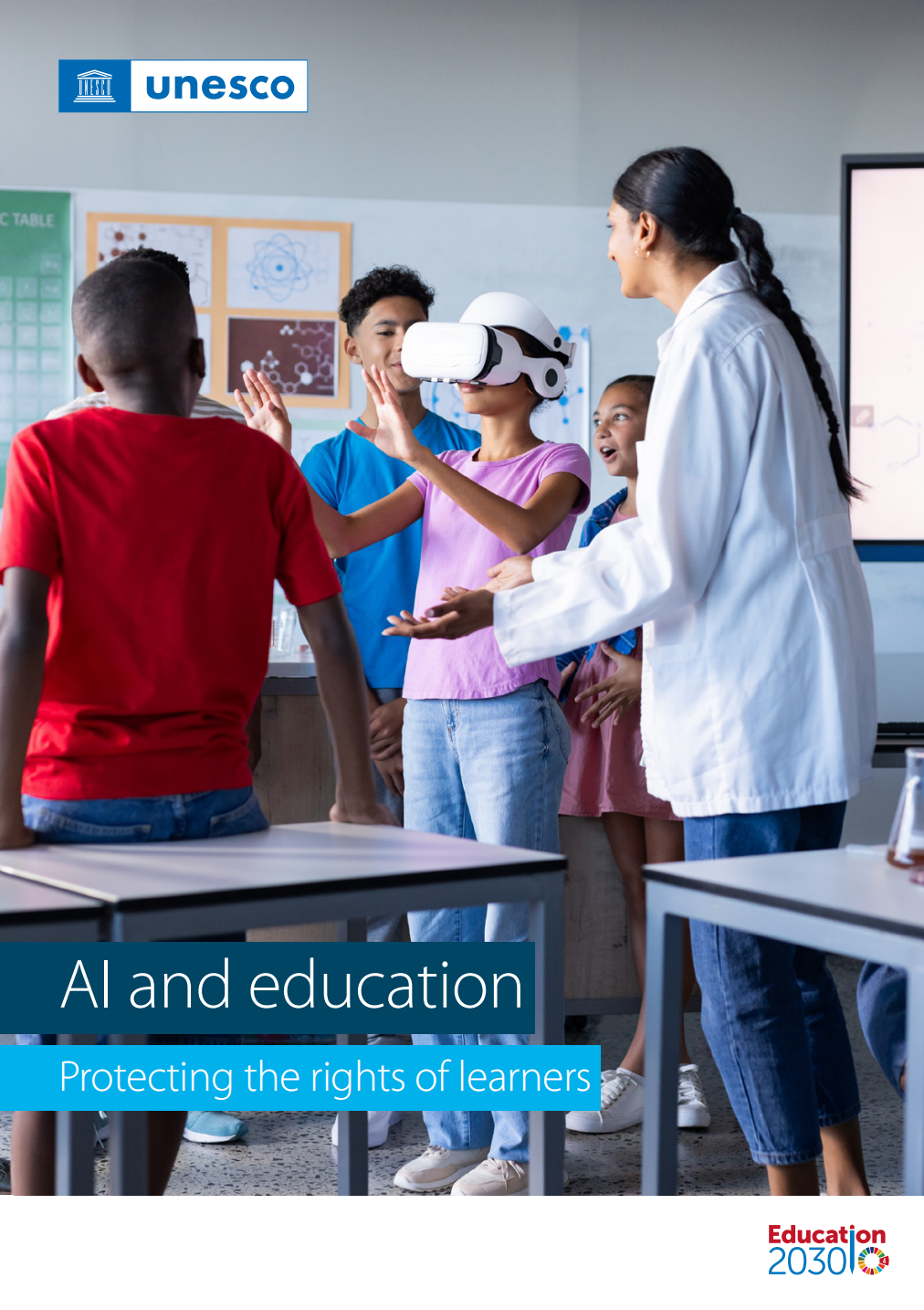
The rapid digitalization of education, accelerated by the COVID-19 pandemic and the development of generative artificial intelligence (Gen AI), is reshaping education and learning. New opportunities for increased access to education, personalized learning, and effective educational management have emerged. These advancements also come with challenges, including the risks of exacerbating existing inequalities, privacy and safety concerns, and emerging issues relating to ethics, governance, and equity.
As of 2024, nearly one-third of the world’s population, around 2.6 billion people, still lacks Internet access, deepening the digital divide and potentially leading to an artificial intelligence (AI) divide. Vulnerable groups, including girls, rural populations, persons with disabilities, and marginalized communities, are particularly affected. In this era of digital technology and AI, without proper safeguards — such as strong data protection measures, ethical frameworks, transparent governance, inclusive access policies, and accountability mechanisms — the right to education and other human rights are at risk.
This report emphasizes that all efforts must prioritize a human-centred and rights-based use of digital technology to benefit all learners. It calls for urgent national and international action to ensure that technology enhances, rather than endangers, the right to education for all.
Artificial intelligence (AI) is reshaping the way we learn, teach and make sense of the world around us – but it is doing so unequally. While one-third of humanity remains offline, access to the most cutting-edge AI models is reserved for those with subscriptions, infrastructure and linguistic advantage. These disparities not only restrict who can use AI, but also determine which knowledge, values and languages dominate the systems that increasingly influence education.
This anthology explores the philosophical, ethical and pedagogical dilemmas posed by the disruptive influence of AI in education. Bringing together insights from global thinkers, leaders and changemakers, the collection challenges assumptions, surfaces frictions, provokes contestation, and sparks audacious new visions for equitable human-machine co-creation.
Covering themes from dismantling outdated assessment systems to cultivating an ethics of care, the 21 think pieces in this volume take a step towards building a global commons for dialogue — a shared space to think together, debate across differences, and reimagine inclusive education in the age of AI.
Copyright © 2025 All Rights Reserved by WDEA