
AI Empowers Educational Planning and Governance, Enhancing the Resilience of Education Systems – International Seminar Kicks Off and International Joint Laboratory Established
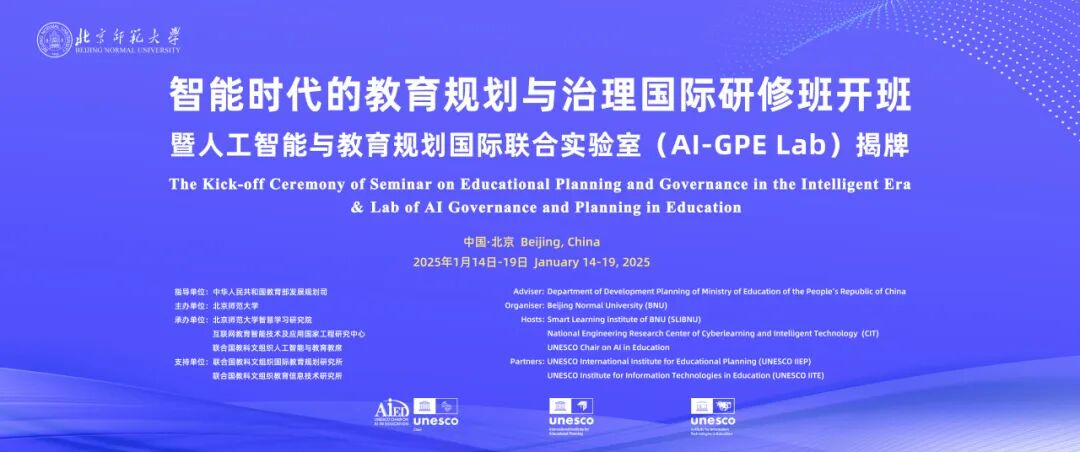
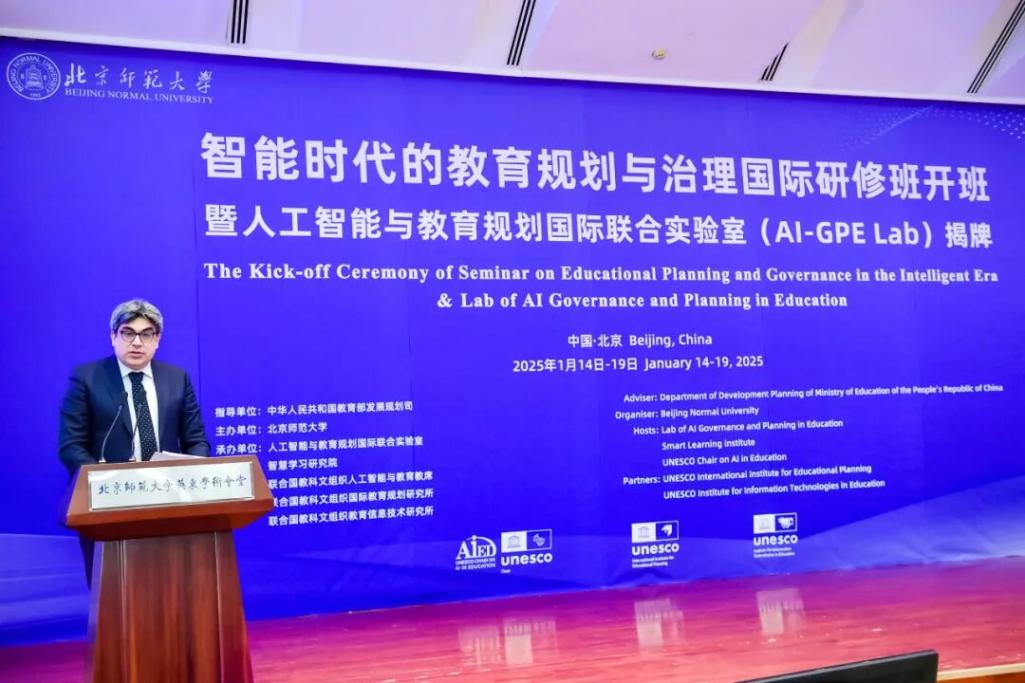
The rapid development of artificial intelligence (AI) technology has brought revolutionary opportunities to the field of education. It not only demonstrates strong potential in human-AI collaborative teaching and learning but also holds promise for transforming models of educational planning and governance, improving the scientific nature of decision-making, promoting equity in resource allocation, and enhancing the resilience of education systems. The UN Transforming Education Summit pointed out that the digital revolution's power must be fully harnessed to ensure inclusive and equitable quality education and lifelong learning for all as a common good and human right, with particular attention to the most marginalized groups. Leveraging its institutional, organizational, and large-scale application advantages, China has made advancing educational digitalization a key component of building a strong education system. To thoroughly implement the spirit of the 20th CPC National Congress and the National Education Conference, accelerate the digital transformation of education, and effectively enhance capabilities in digital education planning and governance, the "International Seminar on Educational Planning and Governance in the Intelligent Era" was launched in Beijing on January 14, 2025. Guided by the Department of Development Planning of the Ministry of Education, the seminar was jointly organized by Beijing Normal University, the UNESCO International Institute for Educational Planning (UNESCO IIEP), the UNESCO Institute for Information Technologies in Education (UNESCO IITE), and the UNESCO Chair on Artificial Intelligence in Education. Concurrently, the “International Joint Laboratory on AI and Educational Planning (AI-GPE Lab)” was established, and the AI Agent for Education Policy and Planning (EduPX) was released, collectively aiming to promote global educational transformation and governance in the intelligent era. More than 200 participants attended the event, including guests from the Department of Development Planning, the Department of Science, Technology and Informatization of the Ministry of Education of China, the Secretariat of the Chinese National Commission for UNESCO, UNESCO IIEP, UNESCO IITE, Beijing Normal University, Tsinghua University, seminar participants, university and school teachers, postgraduate students, and representatives from enterprises and media.
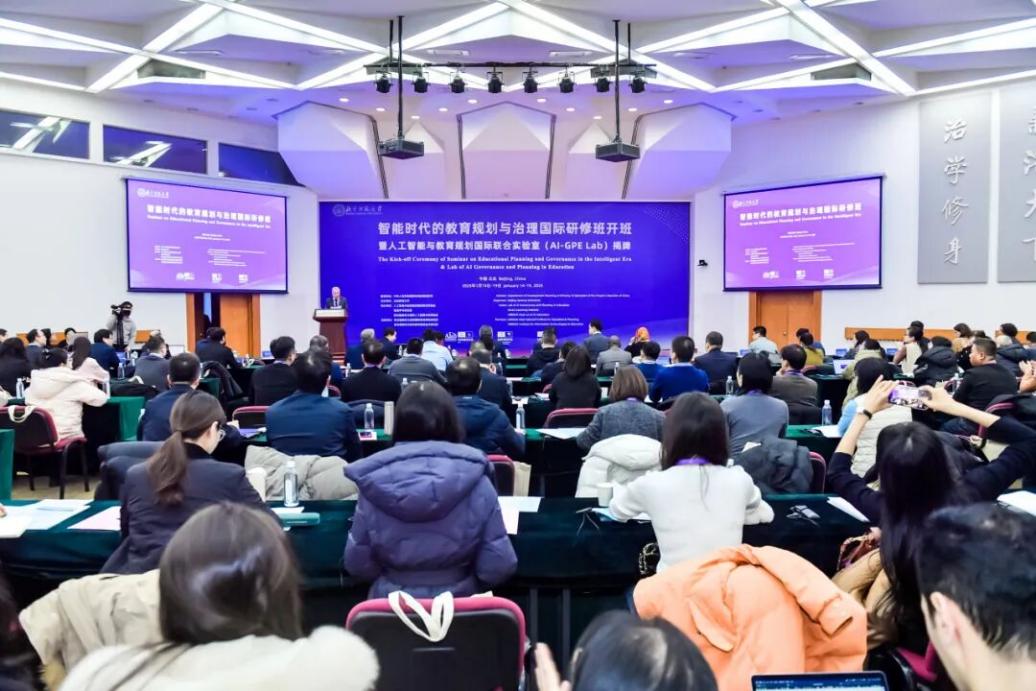
International Cooperation Expands New Frontiers for Digital Education Development
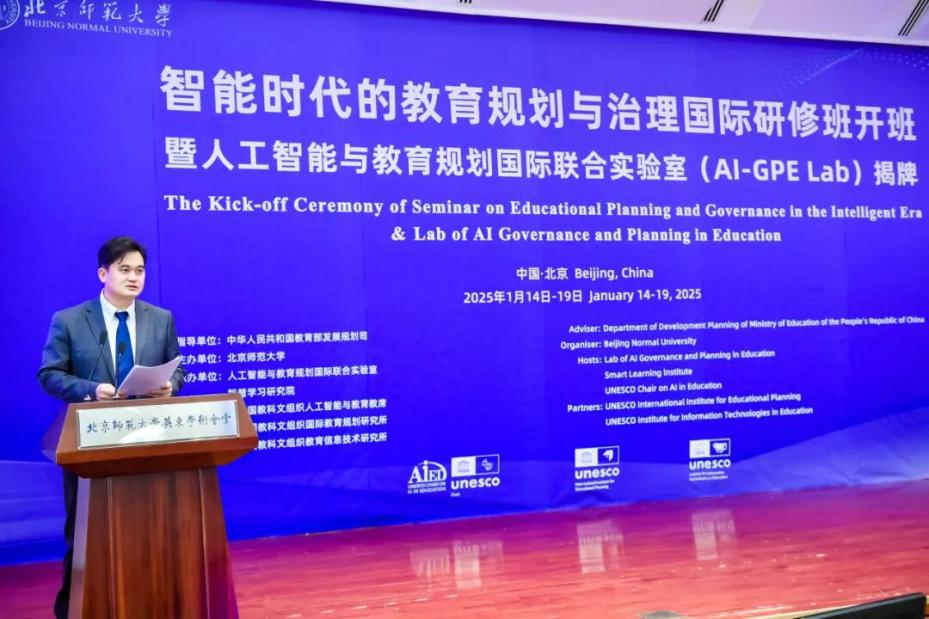
Digital transformation of education is a profound and enduring revolution, where the key lies in application, the potential in sharing, the vitality in innovation, and open cooperation is the essential path. Professor Wang Ming, Vice President of Beijing Normal University, pointed out that strengthening international cooperation and technological innovation to jointly address the educational challenges of the intelligent era and promote high-quality educational development will inject new vitality into the sustainable development of global education and become an important force leading future education. He stated that against the backdrop of the Belt and Road Initiative and global educational transformation, BNU actively promotes the integration of AI technology and education, launched the “AI + Higher Education” teaching reform special project, and deeply implements the “Targeted Teacher Training Plan” and “Teacher Strengthening Project,” empowering the entire cycle of teacher training with AI technology and leading digital education practices in underdeveloped central and western regions. BNU has established long-term cooperative partnerships with UNESCO and its affiliated institutions, committed not only to advancing the full-cycle training of future teachers but also to promoting the global sharing of digital education resources. In the future, BNU will adhere to an education-oriented, problem-driven, and innovation-upholding approach, promote the restructuring of teachers' competencies and literacies in the intelligent era, forge new paths for teacher professional development, making it a core driving force adapting to and promoting smart education innovation. The launch of the International Seminar and the International Joint Laboratory is timely, opening up new space for BNU’s international cooperation in the field of AI and educational planning, and will provide new ideas and solutions for the development of global educational planning, governance, and management talents.
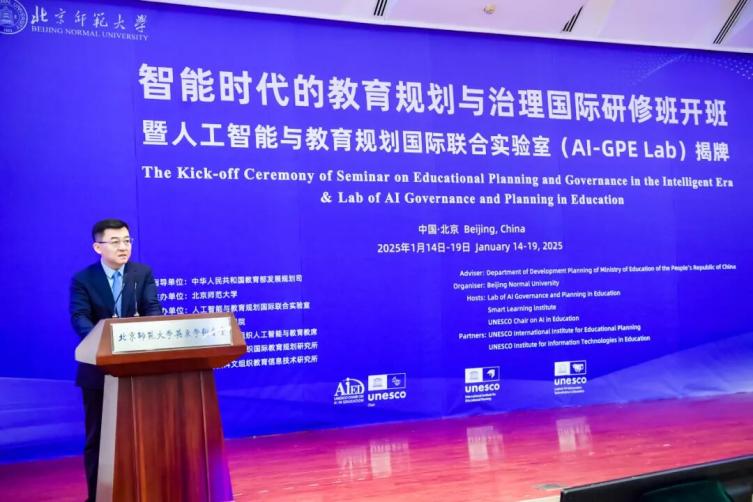
The wave of digitalization and intelligence is reshaping human society at an unprecedented speed, making the importance of education across borders, sectors, and cultures increasingly prominent. China is deeply advancing the National Education Digitalization Strategy, launching the National Smart Education Public Service Platform to provide high-quality digital education resources and support personalized learning and educational reform and innovation. Mr. Ji Zhi, Deputy Director-General of the Department of Development Planning of the Ministry of Education of China, pointed out that the rapid development of AI has opened up entirely new possibilities for educational planning and governance. Digital education brings opportunities for educational equity and social inclusion, but also faces challenges such as data security and algorithmic ethics, requiring global consensus and standards. He stated that China actively participates in international cooperation to enhance its global influence and, through strategic guidance and policy support, is committed to optimizing the allocation of educational resources, promoting educational equity, especially narrowing the educational gap in central and western regions. The wave of the intelligent era has arrived; only by joining hands can we transform technological dividends into new opportunities for educational development. He called for exchanging wisdom, building consensus, and cooperating in areas such as infrastructure and open resources with a global vision and forward-thinking mindset to jointly promote educational transformation in the intelligent era and realize a more inclusive and creative new educational ecosystem.
Mr. Martín Benavides, Director of the UNESCO International Institute for Educational Planning (UNESCO IIEP), stated that UNESCO IIEP has already helped many countries advance the design and implementation of education policies and assisted in improving education quality and management efficiency in the AI era. UNESCO IIEP and BNU have initiated a new joint research program aimed at providing more future-oriented innovative digital tools and standard guidelines for educational planning and management through project cooperation, training, and applied research, supporting the digital transformation of global education systems. Educational planning and governance in the intelligent era is an important topic, and the International Seminar and International Joint Laboratory are landmark initiatives. He emphasized that digital innovation offers opportunities to improve the efficiency, resilience, and agile responsiveness of education systems, but also brings challenges to resource allocation and governance methods, calling for consensus and joint efforts from the international community. He looks forward to in-depth exchanges and cooperation with BNU and other partners in AI planning and monitoring innovation trends and calls for the global education community to work together to promote the sustainable development of digital education and provide solid support for achieving the 2030 Sustainable Development Goals.
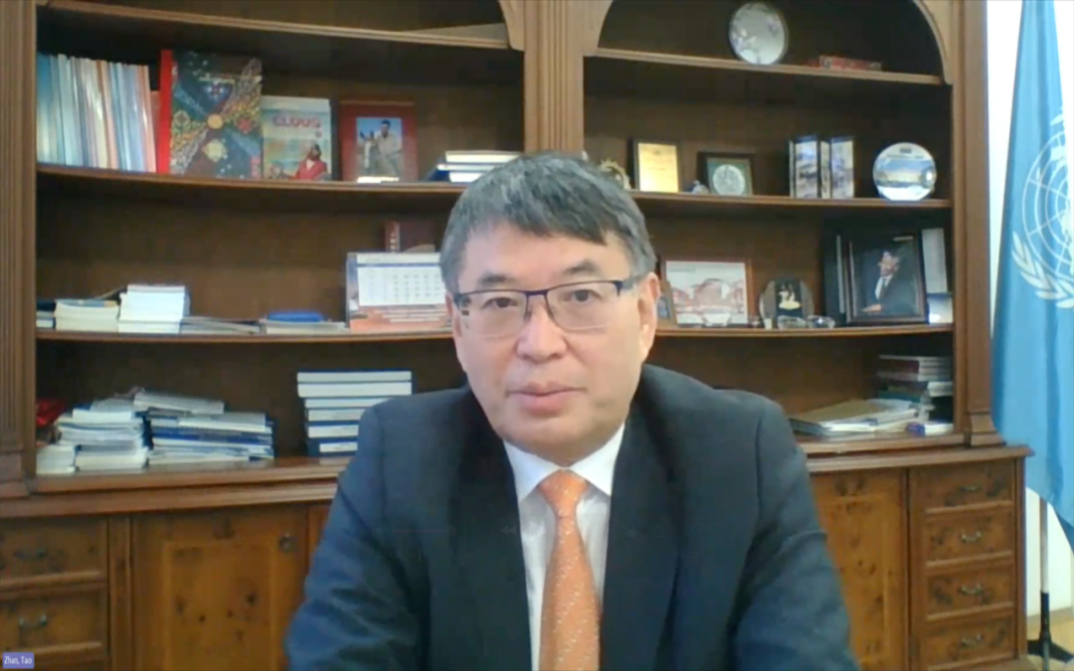
Emerging technologies like generative AI bring limitless possibilities to education, but also numerous unexpected challenges, requiring the global education community to unite in addressing them. Professor Zhan Tao, Director of the UNESCO Institute for Information Technologies in Education (UNESCO IITE), stated that BNU, as a pioneer committed to global education transformation, has experience in smart education research and practice that complements the strategic cooperation with UNESCO IITE, while UNESCO IIEP’s global leadership in educational planning provides a solid foundation for the tripartite cooperation. He believes that the International Joint Laboratory on AI and Educational Planning is the fruit of collaborative innovation, and through the sincere cooperation of these three institutions, not only has a fully functional platform been built, but a broader range of stakeholders has been gathered in promoting global digital education transformation. He expressed strong confidence in this cooperation, looking forward to seizing new opportunities in digital education development through continuously deepening international cooperation and propelling global education system forward towards intelligence and sustainable development.
Ms. Muriel Poisson, Research Lead of UNESCO IIEP, introduced the joint research project between BNU and UNESCO IIEP. She pointed out that the current education field faces challenges like the digital divide and technological inequality, and lacks a systematic conceptual framework to guide the use of digital tools. The joint research project focuses on how to use advanced AI technologies to improve global education systems and address digital divides and inequalities in education. She outlined the project's scope: firstly, concerning policies, strategic planning, and governance mechanisms – how AI and innovative digital tools are integrated into the education policies, strategic planning frameworks, and governance mechanisms of different countries; secondly, the application scenarios and guidelines for different types of AI technologies and tools in educational planning and management, such as early warning systems, resource allocation, teacher management, student enrollment, and monitoring and evaluation; thirdly, research on evaluating the effectiveness of technology applications, focusing on the extent to which AI and digital tools can help address educational inequality, improve education quality, and issues of digital privacy. The project will conduct surveys and case studies in cooperation with multiple UNESCO Member States, utilizing system tools for data management, teaching, data analysis, decision support, crisis management, audit control, and communication to support project research, and calls for more international partners to participate in promoting the digital transformation of global education management and planning.
AI Agents: A New Engine for Empowering Education Governance through the International Joint Laboratory
International research indicates that technologies such as big data, natural language processing, and generative AI have innovative application potential in processes like resource allocation, teaching supervision, admissions and examinations, inspection and auditing within educational planning and governance. UNESCO IIEP proposed the concept of “Crisis-Sensitive Educational Planning,” advocating for comprehensive, preventive, and strategic approaches to risks to ensure education systems adapt to changing external environments. To address practical challenges in global educational planning and governance, promote the deep integration of AI and education, ensure AI applications in education align with fairness, safety, ethics, and correct values, respond to shared concerns about AI technology applications in education, enhance crisis response capabilities in the intelligent era, and support sustainable educational development, BNU initiated the establishment of the “International Joint Laboratory on AI and Educational Planning” (Lab of AI Governance and Planning in Education, abbreviated as AI-GPE Lab). It has established cooperative partnerships with UNESCO IIEP, UNESCO IITE, and others, and invited the Arab League Educational, Cultural and Scientific Organization (ALECSO), Tsinghua University, Zhejiang University, Hangzhou Normal University, and Zhejiang Lab to co-build the laboratory.
The laboratory aims to promote the application of AI technology in educational planning and governance, regulate AI in education governance, enhance digital education leadership, and build more inclusive, equitable, efficient, transparent, data-driven, and resilient smart education systems. The laboratory focuses on three development directions: first, large language models and education policy, building a cross-regional comprehensive education data aggregation platform and creating AI agents for education policy and planning; second, digital education and intelligent social experiments, constructing a full-chain practice data collection and process tracking system for digital education, conducting intelligent social experiments, and performing long-term tracking and dynamic optimization of policy impacts; third, regional education development and international comparison, providing multi-dimensional, highly timely indicator comparisons, offering precise data and experience support for regional education development planning, analyzing and comparing smart education development data, and conducting trend predictions. Professor Huang Ronghuai, Holder of the UNESCO Chair on Artificial Intelligence in Education, suggested that the laboratory should also focus on the scarcity of digital resources in Africa and Small Island Developing States (SIDS), allowing digital education to benefit everyone fairly and jointly achieving the UN 2030 Sustainable Development Goals. He stated that facing the new demands of AI governance and educational planning in the intelligent era, and the new scenarios of AI applied to educational planning and governance, he hopes more partners will join the International Joint Laboratory to jointly conduct policy research, technical cooperation, capacity building, consulting services, information dissemination, and networking, working together to promote digital education application, sharing, and innovation. During the event, the laboratory's first research outcome – the Education Policy and Planning AI Agent (EduPX) – was released.
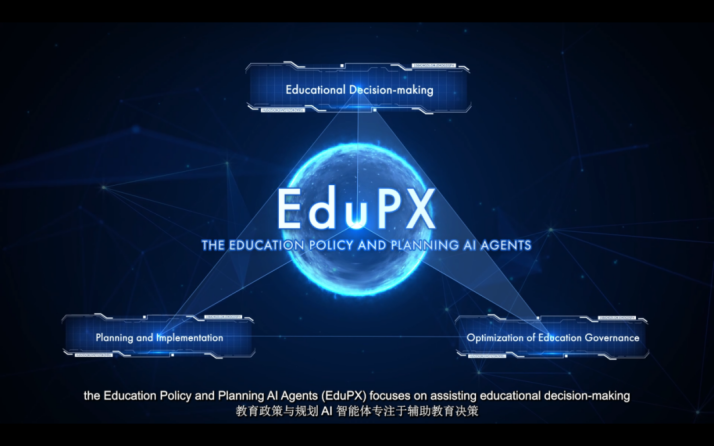
Addressing core challenges such as difficulty in accurately retrieving policy documents, challenges in policy comparison and evaluation, and dynamic prediction of policy trends, EduPX specializes in assisting educational decision-making, the formulation and implementation of educational plans, and optimizing education governance systems. It provides scientific, multilingual policy support and strategic insights for policymakers, management decision-makers, as well as educational institutions, research institutions, and international organizations. EduPX is based on multi-dimensional data from education, economy, technology, and other fields, employs large language models with different parameter sizes and domain-specific models, and proposes a multi-agent collaborative framework. The pre-training dataset for EduPX aggregates hundreds of thousands of publicly available education policy documents from international organizations, integrates multi-modal data from political, economic, cultural, and other fields of various countries worldwide, and conducts in-depth cooperation with several globally leading enterprises to build a powerful computing system. EduPX possesses core features such as multi-dimensional analysis and scientific evaluation, multilingual adaptation support, full-process policy service assistance, high-quality policy data support, transparent and highly credible results, and personalized intelligent feedback. Currently, EduPX involves five main application scenarios: precise policy retrieval and interpretation, policy knowledge Q&A, cross-national policy analysis and evaluation, intelligent assistance in policy drafting and text optimization, and data-based policy trend prediction.
Integrated Application of AI Technology is a Key Focal Point for Digital Education
Convergence and integration are important experiences behind the success of China’s education digital transformation and a concept to be upheld in the future. AI technology has been widely used in aiding learning, teaching, research, and management, laying a solid technical foundation for the future of digital education. It provides teachers with intelligent teaching assistance tools, offers learners more learning opportunities and better learning experiences, revolutionizes digital pedagogy, optimizes the allocation of educational resources, and enables education to adapt more agilely to the needs of the digital age. In the keynote report session, experts and scholars shared policies, technologies, and practices surrounding AI applications in education.
Martín Benavides believed that the education sector faces major challenges such as a global teacher shortage, climate change, and youth unemployment, which could be alleviated through the integrated application of AI. AI-driven distance education and mentoring programs can effectively compensate for the lack of educational resources in remote areas, addressing teacher shortages; AI technology can identify climate-vulnerable regions and schools through data analysis to develop more resilient education strategies to cope with the impacts of climate change; the combination of digital platforms and AI algorithms helps narrow the education gap between different regions; AI can not only personalize learning paths and improve efficiency but also identify dropout risks through early warning systems, providing data support for precise interventions. These innovations not only provide new solutions for improving education systems but also promote educational equity and access. He observed that some good policies have not been well implemented and executed, hoping that new practices in educational planning and governance can be proposed in the AI era.
AI large models are a key driver for achieving educational integration, intelligence, and internationalization. Professor Xu Bin from Tsinghua University introduced China’s self-developed foundational AI large model (ChatGLM) and its applications in the education field. ChatGLM not only achieves open-source technology but can also run on China's self-developed GPU chips, marking an important breakthrough in the field of large model development in China. In the education field, ChatGLM, simulating various functional areas of the human brain, is used to develop AI teaching assistants, significantly enhancing interactivity and personalized support in basic and higher education. AI teaching assistants, through Q&A and companion learning interaction functions, have been piloted in several courses at Tsinghua University. Furthermore, ChatGLM promotes international cooperation, undergoing language adaptation with multiple countries to support them in training their own sovereign large models, demonstrating its potential for international application. Professor Xu Bin stated that through continuous technological innovation and international cooperation, large models are expected to provide an intelligent engine of new quality productive forces for the global education system, helping to achieve more universal and equitable education.
In the current context of digital transformation, empowering digital education with AI involves not only technological innovation but also the coordinated optimization between education training and the labor market. Dr. Randa Ahmad Hafez Shaheen, First Undersecretary of the Ministry of Education and Technical Education of Egypt, shared a case study where policy implementation met the actual needs of workers in terms of required skills and professions, providing employment opportunities for workers and improving employment levels and social welfare. She believed that AI provides new tools for the education system, allowing for precise analysis of labor market demands, adjusting the direction of education and training, and enhancing economic competitiveness. She emphasized that education must align with the skills required by the market, that cooperation between government and enterprises is crucial for the rational allocation of education and training resources, and that supporting SMEs is also an important driver for improving employment, which governments should promote through laws and financial facilitation. She pointed out that matching resource policies with labor market demands is a dynamic process requiring long-term coordination, involving the joint cooperation of government, educational institutions, and the private sector to achieve sustainable economic growth.
The integrated application of AI technology brings more potential and development opportunities to the education field. Professor Liu Dejian, Founder of NetDragon Websoft Holdings Limited and Co-Dean of the Smart Learning Institute of Beijing Normal University, shared the latest AI technologies and explored how to better apply these AI technologies in the education field. He stated that technological breakthroughs in AI in areas such as video creation, voice technology, automatic lip-syncing, music generation, and 3D modeling have brought more innovative opportunities for education. NetDragon actively promotes the digital transformation of education through AI-powered educational resources, educational spaces, and educational platforms. In K-12 education, NetDragon’s “Future Lab” covers multi-disciplinary and multi-grade content, providing immersive learning experiences through XR technology, and its virtual experiment solutions have benefited numerous schools and millions of teachers and students across the country. “Innovation Hub” and “Vocational Hub” combine AR/VR with AI technology to provide personalized guidance and real-scenario simulation for vocational education. “EXam Hub” utilizes AI technology to achieve precise monitoring of remote examinations. In terms of international cooperation, NetDragon launched the AI-empowered education platform aom-ai for Thailand and participated in the Global Future Education Design Competition to promote the widespread application of AI in education. He advocated embracing technology and hoped to explore AI applications in education together with more educators, teachers, and students, witnessing the infinite possibilities brought by AI.
Enhancing Digital Education Planning and Governance Capacity to Advance Education Digital Transformation
In the intelligent era, strengthening the resilience of education systems and improving their ability to respond to various risks have become key topics of global common concern. The “International Seminar on Educational Planning and Governance in the Intelligent Era” lasted for six days from January 14 to 19, focusing on core issues of educational planning, management, and AI governance, covering four themes: Digital Transformation and Global Educational Planning, Application of AI in Educational Planning and Governance, Futures of Education, and the Value of Educational Planning. The seminar targeted middle-aged and young leaders from relevant departments of the Ministry of Education, local education administrative departments, and universities, as well as international educational planning researchers, policymakers, and practitioners, assisting participants in achieving comprehensive improvement in cognition, consensus building, mutual exchange, and planning skills. Thirty-eight participants from 19 countries participated in this seminar. The seminar adopted a combination of online and offline methods, including various activity formats such as individual learning, collective learning, group learning, and practical learning. Through diverse learning methods like literature review, practical investigation, expert reports, sharing insights, and case analysis, it comprehensively enhanced participants’ capabilities in educational planning and governance, resulting in outcomes such as practice summaries, case analyses, and solutions.
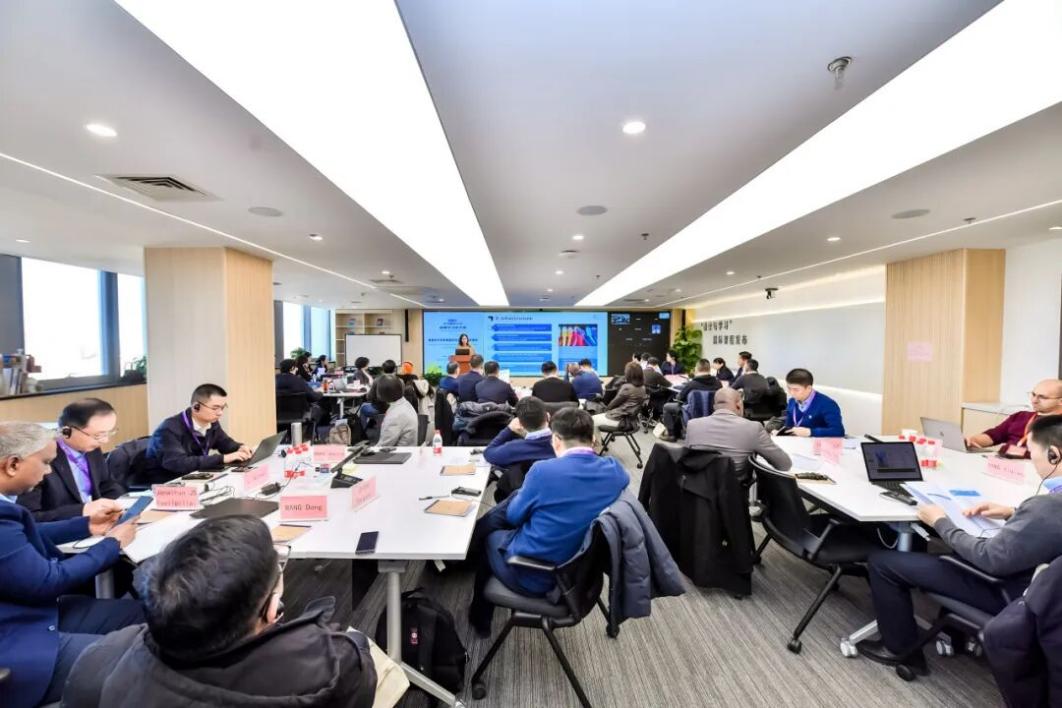
Positioned for national capacity building in digital education planning and governance, the seminar aims to converge global educational perspectives and integrate international digital resources to achieve four objectives: First, to address the shortcomings in educational planning and governance capabilities across regions, enhance the policy-making capacity of young and middle-aged educational leaders in education administrative departments and universities, and practically solve talent issues in digital education planning. Second, to broaden international horizons, enabling domestic education planners to understand the latest international trends, dynamics, and explorations through face-to-face exchanges with international organizations and foreign education planners, collect innovative cases from multiple countries using AI to support educational planning and governance, and develop training courses for global education planners. Third, to promote Chinese digital education concepts, tell China’s story well, and find paths and open channels for Chinese solutions and experiences to go global. Fourth, to strengthen international cooperation and share high-quality educational resources.
Guided by the Department of Development Planning of the Ministry of Education, the seminar was jointly organized by the International Joint Laboratory on AI and Educational Planning, the Smart Learning Institute, and the UNESCO Chair on Artificial Intelligence in Education, with support from UNESCO IIEP and UNESCO IITE.
Copyright © 2025 All Rights Reserved by WDEA