From June 15 to 18, the “AI for the Future of Teaching, Research and Personalized Learning” Academic Exchange Program, jointly organized by Beijing Normal University (BNU) and the National Institute of Development Administration (NIDA), Thailand, concluded successfully in Bangkok, Thailand. Marking a milestone in translating the outcomes of scientific research collaboration between the two institutions into practical applications, the program was coordinated by the Smart Learning Institute of Beijing Normal University and the National Engineering Research Center for Educational Technology and Applications.
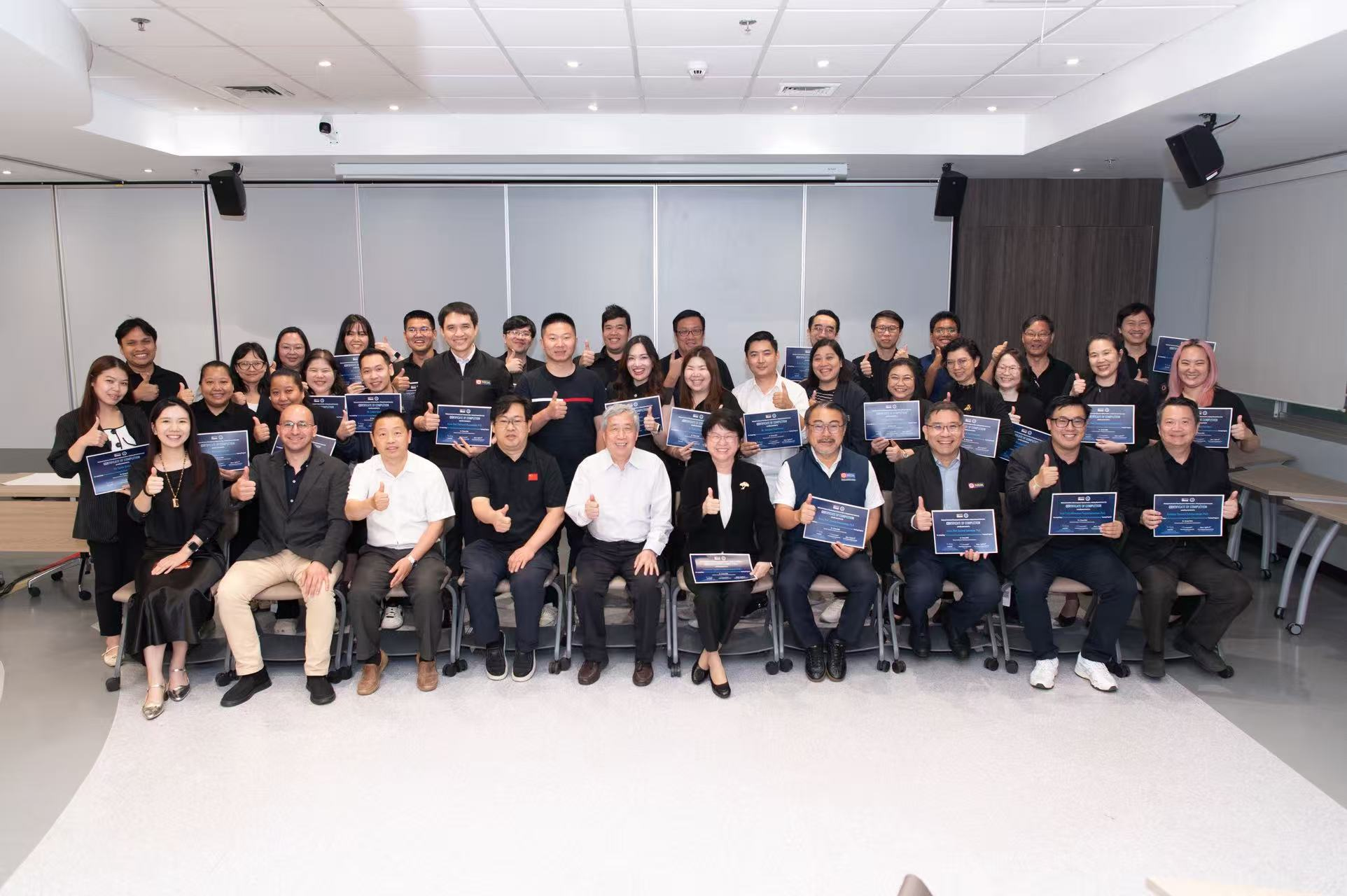
More than 100 university administrators, faculty members, and professional staff from NIDA participated throughout the program. Centered on key topics including global trends in artificial intelligence development, pathways for smart education advancement, the practical implementation of AI-enabled educational scenarios, intelligent teaching and research tools, as well as AI ethics and governance, participants engaged in systematic learning and in-depth discussions. Leveraging the framework of the World Digital Education Alliance (WDEA), the program further strengthened the foundation for China–Thailand exchange, mutual learning, and collaborative innovation in the digital transformation of higher education.
As a member institution of the WDEA, NIDA was established in 1966 and is one of Thailand’s leading public research universities, with distinctive strengths and significant influence in public governance, policy research, business education, and advanced talent development. NIDA is also a strategic partner of Beijing Normal University. Over the years, the two institutions have maintained sustained collaboration in areas including smart campus development, AI-enabled teaching applications, digital education governance, research innovation and commercialization, and joint talent cultivation.
Since 2025, research teams from the Faculty of Education at BNU and the National Engineering Research Center for Educational Technology and Applications have conducted multiple reciprocal visits and collaborative discussions with NIDA. The two sides have engaged in extensive exchanges on topics including smart classroom enhancement, digital education product evaluation, intelligent campus transformation, digital leadership development, the NIC-NIDA Academic Conference, and the development of the WDEA platform, laying a solid foundation for this academic exchange program.
Closely aligned with the practical needs of NIDA’s teaching, research, and administrative development, this academic exchange program established an integrated model featuring pre-event orientation, intensive exchanges, interactive discussions, hands-on practice, and outcome reflection. The program covered multiple professional modules addressing the full spectrum of AI applications in education.
The session “Global AI Development Trends and the Future of Smart Education” explored the evolution of artificial intelligence and emerging opportunities for digital transformation in higher education. Drawing on institutional practices, the session interpreted national education digitalization strategies and shared exemplary cases of smart campus development from China and abroad, including practices supported by the Ministry of Education of China and the World Digital Education Alliance.
The session “Scenario-based Applications of Artificial Intelligence in Teaching and Learning” introduced practical approaches for applying AI agents in multidisciplinary lesson preparation, assessment, and educational resource development. It also addressed the development of student digital profiles and formative assessment systems, explored AI-powered literature analysis, intelligent research assistants, and human–AI collaborative interdisciplinary research paradigms, while examining key issues related to AI implementation in educational institutions, including educational data governance and algorithmic standards.
The session “Exploration and Practice of AI-enabled Educational Tools” focused on smart campus ecosystems, educational digital twins, and human-centered intelligent campus evaluation frameworks. Participants explored and practiced AI educational tools through hands-on activities, gaining insights into the application scenarios of various generative AI tools in education. The session also provided practical guidance on developing customized AI agents, conducting tool-based exercises, and designing institution-specific teaching solutions.
As a key digital education capacity-building initiative under the framework of the strategic cooperation memorandum between the two universities, this academic exchange program has established a new platform for deeper academic collaboration, research cooperation, and joint cultivation of high-level talent.
Moving forward, Beijing Normal University will continue leveraging platforms including the Smart Learning Institute of Beijing Normal University, the National Engineering Research Center for Educational Technology and Applications, and the UNESCO Chair on Artificial Intelligence and Education to further strengthen long-term cooperation with NIDA and other Thai education partners. The two sides will continue expanding collaboration in areas such as intelligent classroom innovation, AI-assisted academic research, personalized learning systems, digital education governance, and ethical frameworks, jointly exploring pathways toward a smarter, more inclusive, and sustainable digital transformation of higher education.
Copyright © 2025 All Rights Reserved by WDEA