
2026年5月11日至13日,2026世界数字教育大会在杭州举办,大会主题为人工智能+教育:变革 发展 治理。世界数字教育联盟联合秘书处现将会议资料汇编整理如下
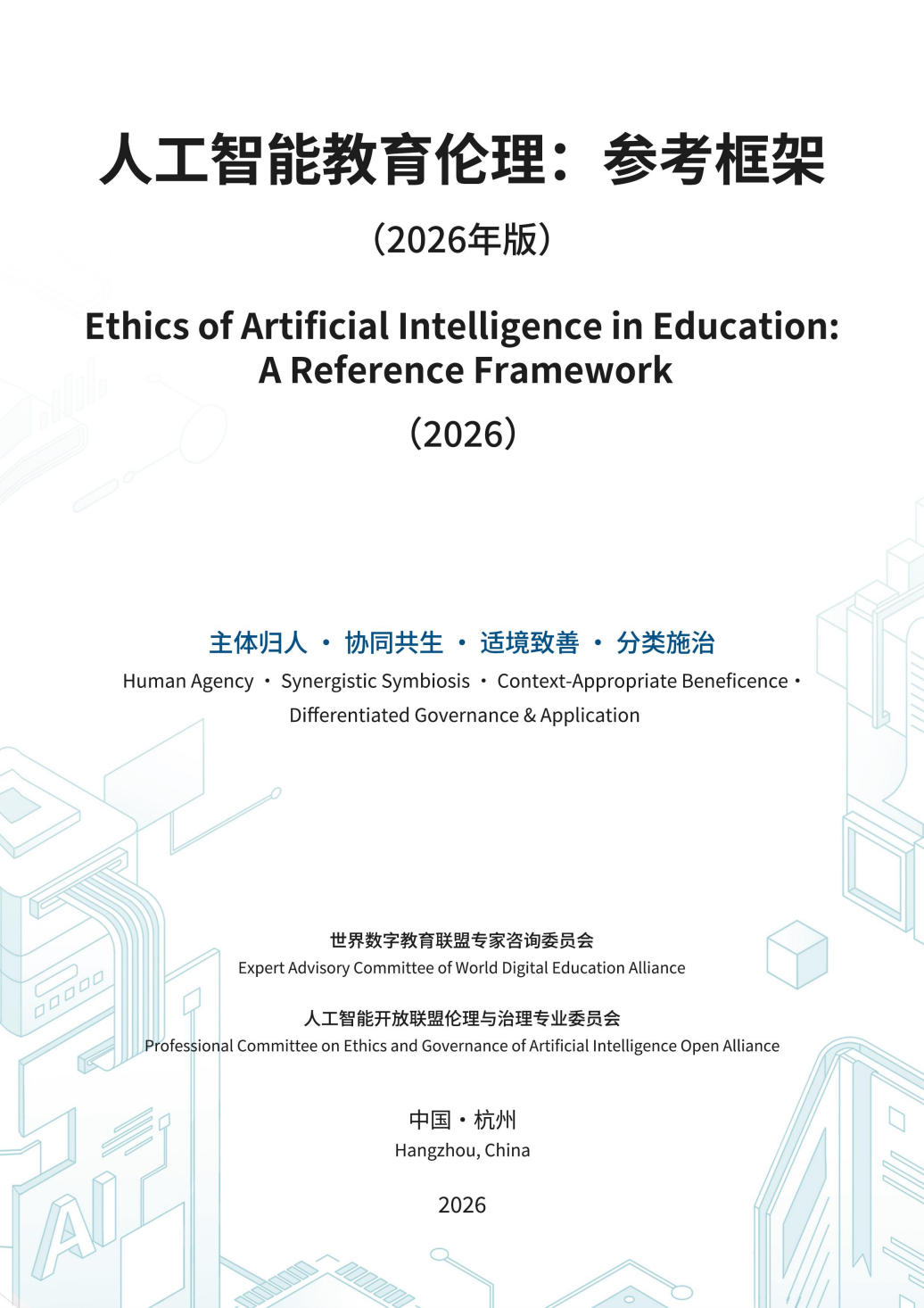
《人工智能教育伦理:参考框架》的提出,为基础教育、高等教育、职业教育等教育阶段与类型中的人工智能应用,提供系统性的伦理框架与行为导引。《参考框架》确立“主体归人、协同共生、适境致善、分类施治”的核心理念,明确人工智能教育应用三类风险类型及责任认定原则,提出基础教育、高等教育和职业教育中教育者、学习者和教育机构的伦理行为规范。同时,《参考框架》界定了“禁止准入、有限使用、鼓励使用”三类行为界限及其动态调整机制,守护教育底线,引导人机协作,激发创新潜能。《参考框架》旨在进一步明确“人工智能应当以何种方式、在何种边界内、遵循何种价值秩序进入教育”,力求在技术发展与育人使命之间建立清晰的规范基础,推动人工智能发展成果更加公平地惠及全体学习者。
《人工智能教育应用系统》确立了覆盖关键技术、“教学评”场景与安全伦理的人工智能教育应用系统参考框架,秉持“以人为本、教育引领、技术可信”原则,为人工智能教育应用提供贯穿生命周期的技术规范。标准明确了人工智能教育应用支撑技术功能、教育场景通用功能、安全与伦理功能的基本要求,适用于指导人工智能教育应用系统的设计、研发、测试、应用和评价。
《人工智能赋能智慧校园基本要素》是利用人工智能技术开展智慧校园的规划、设计和建设的框架性指南,明确了以人工智能为核心驱动力的智慧校园通用架构,规定了智慧校园在门户层、应用层、支撑层和AI能力平台的基本功能和能力要求。标准突出智能体入口与多模态交互,依托由教育智能体平台、通用大模型、教育专属大模型和基础AI能力组成的AI能力平台,结合各逻辑层功能,构建物理空间与信息空间有机融合的数字教育生态系统,适用于各类教育机构、相关技术提供方及标准制定机构开展智慧校园的规划、设计、实施与评估。
当前,大力推进教育数字化,发展包容和公平的优质教育,让全民终身享有学习机会,已经成为世界各国的普遍共识。面对教育发展与变革,中国愿与世界各国携手合作,共促国际文明互鉴、共享优质教育资源、共建协同创新生态、共护人工智能安全,构建伴随每个人一生的教育、平等面向每个人的教育、适合每个人的教育、更加开放灵活的教育。
为全面介绍中国推进教育数字化、发展智慧教育的理念、思路、举措和成效,分享智能时代教育发展与变革的实践经验,深化数字教育领域国际交流合作,共绘全球智慧教育发展新蓝图,特此发布白皮书。
《数字教育前沿 (英文)》是由中华人民共和国教育部主管,高等教育出版社主办,由德国施普林格·自然 (Springer Nature) 负责海外发行的英文学术期刊。本刊旨在反映各国数字教育政策动态、学术前沿和研究热点,探讨数字教育与科技创新重点和难点问题,搭建具有中国特色的数字教育重大成果发布与交流平台,服务数字教育发展。
《数字教育前沿 (英文)》是由中华人民共和国教育部主管,高等教育出版社主办,由德国施普林格·自然 (Springer Nature) 负责海外发行的英文学术期刊。本刊旨在反映各国数字教育政策动态、学术前沿和研究热点,探讨数字教育与科技创新重点和难点问题,搭建具有中国特色的数字教育重大成果发布与交流平台,服务数字教育发展。
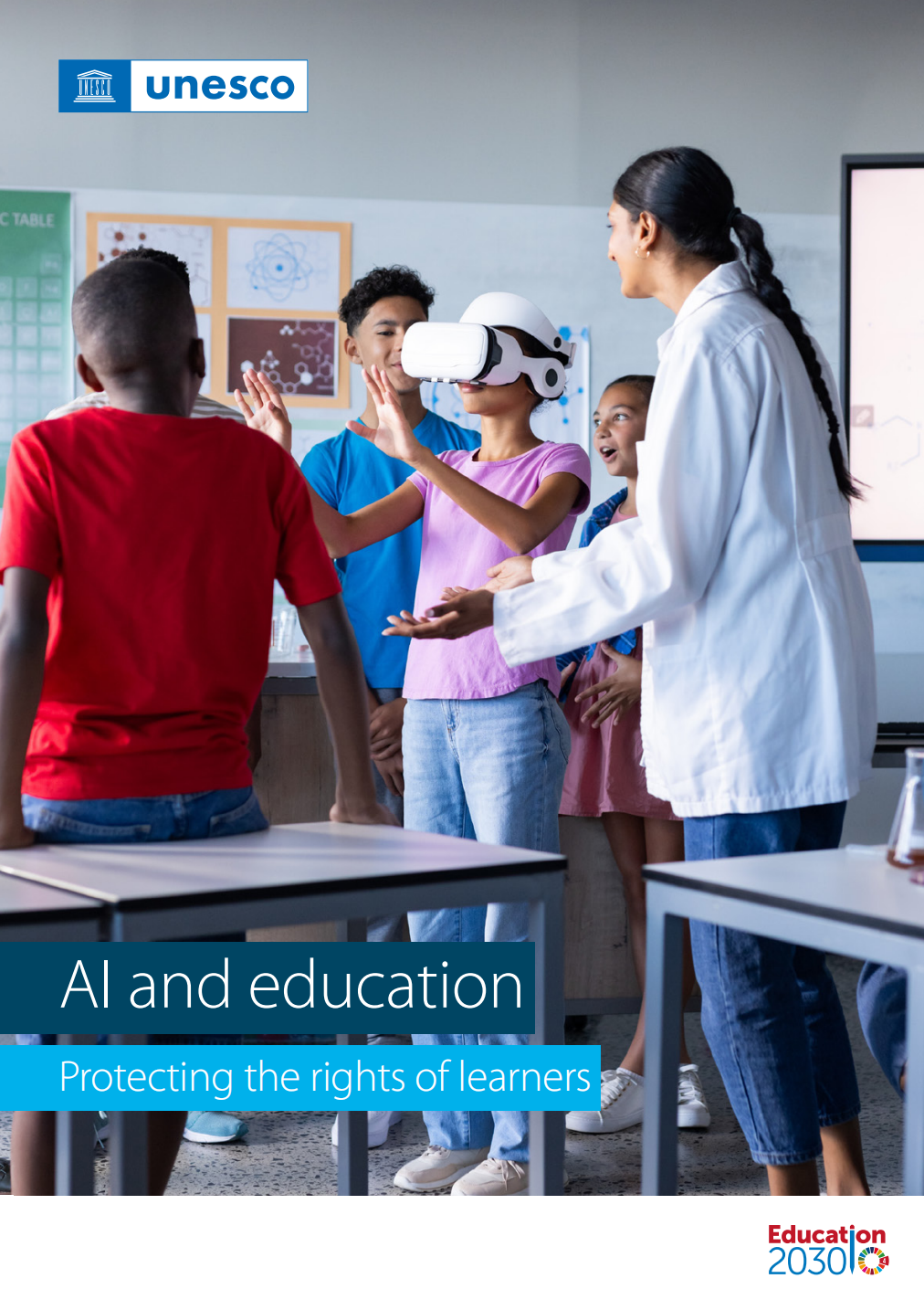
The rapid digitalization of education, accelerated by the COVID-19 pandemic and the development of generative artificial intelligence (Gen AI), is reshaping education and learning. New opportunities for increased access to education, personalized learning, and effective educational management have emerged. These advancements also come with challenges, including the risks of exacerbating existing inequalities, privacy and safety concerns, and emerging issues relating to ethics, governance, and equity.
As of 2024, nearly one-third of the world’s population, around 2.6 billion people, still lacks Internet access, deepening the digital divide and potentially leading to an artificial intelligence (AI) divide. Vulnerable groups, including girls, rural populations, persons with disabilities, and marginalized communities, are particularly affected. In this era of digital technology and AI, without proper safeguards — such as strong data protection measures, ethical frameworks, transparent governance, inclusive access policies, and accountability mechanisms — the right to education and other human rights are at risk.
This report emphasizes that all efforts must prioritize a human-centred and rights-based use of digital technology to benefit all learners. It calls for urgent national and international action to ensure that technology enhances, rather than endangers, the right to education for all.
Artificial intelligence (AI) is reshaping the way we learn, teach and make sense of the world around us – but it is doing so unequally. While one-third of humanity remains offline, access to the most cutting-edge AI models is reserved for those with subscriptions, infrastructure and linguistic advantage. These disparities not only restrict who can use AI, but also determine which knowledge, values and languages dominate the systems that increasingly influence education.
This anthology explores the philosophical, ethical and pedagogical dilemmas posed by the disruptive influence of AI in education. Bringing together insights from global thinkers, leaders and changemakers, the collection challenges assumptions, surfaces frictions, provokes contestation, and sparks audacious new visions for equitable human-machine co-creation.
Covering themes from dismantling outdated assessment systems to cultivating an ethics of care, the 21 think pieces in this volume take a step towards building a global commons for dialogue — a shared space to think together, debate across differences, and reimagine inclusive education in the age of AI.
Copyright © 2025 All Rights Reserved by WDEA